
Generation Game: The RSA's Origin Stories exhibition shows the power of mentorship
Part of the RSA’s 200th anniversary celebrations, Origin Stories will trace links between teachers and students down the generations to make a geneaology of art in Scotland, writes Susan Mansfield
There is a moment in the life of almost every artist when the right encounter can be transformational. For Elvey Stedman, it was a third year tutorial at Duncan of Jordanstone College of Art & Design with Matthew Dalziel, of artist partnership Dalziel + Scullion.

Stedman was less than happy with her work and had recently taken a new direction, foraging for natural materials like acorns, berries and grasses. “Matt met me where I was at that time,” she says. “He didn’t ask me: ‘Why are you making this? What does it mean?’ He just saw it and we talked really naturally about collecting pine needles and making a sculpture out of them. He told me to go and forage in Tentsmuir Forest and that became a touchstone place for me.”
It was a simple conversation which gave her confidence to move forward in a new direction and develop work she felt proud of. “It was really serendipitous that Matt found me at that time. The simplicity of that interaction was galvinising. I can trace what I make now back to that day. To feel that artists like Matt and Louise believe in your work can be such a boost when you’re young and still trying to find your way.”
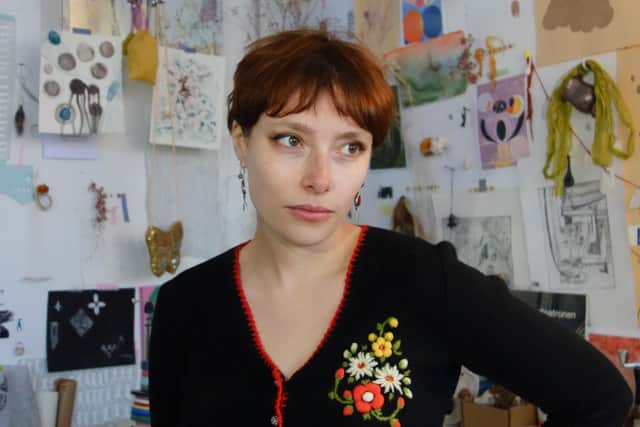
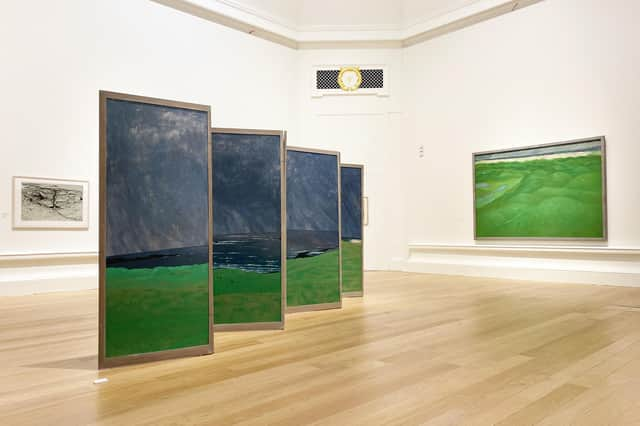
Stedman, who graduated in 2021, is one of the youngest artists in the RSA’s exhibition, Origin Stories, which opens on 24 January, kicking off a year of bicentenary celebrations across Scotland and beyond. It focuses on the importance of training in the RSA’s own origin story, tracing links between teachers and students artist to artist down the generations to make a geneaology of art in Scotland.
“It’s a fascinating family tree to trace,” says Sandy Wood, Head of Collections at the RSA and the exhibition’s curator. “It has been really rich and rewarding to trace a path from the artists who are graduating from art college today back to the practitioners of 200 years ago.”
In his colour-coded diagram, lines of connection criss-cross the country as art schools are established in Scotland’s four major cities (and now also in Moray). “Everything is so connected in Scotland, because we’re a small country. An artist might train in one place, teach in another, be a visiting lecturer in another. The more I research, the more I find that there are two degrees of separation in Scotland, compared to the usual six.”
Training artists was a central objective of the Scottish Academy of Painting, Sculpture and Architecture when it formed in 1826 (it received its royal charter 12 years later). At that point, there were no art colleges as we know them today, just a handful of institutions mainly aimed at training designers for trade and industry. At the RSA’s Life School, which began in 1836 and operated for nearly a century, artists taught artists in an academic setting based around the core skill of life drawing.
Origin Stories traces a lineage of skills and ideas from teacher to student, beginning with artists such as William Allan, Robert Scott Lauder and William McTaggart, and moving down through the generations to EA Walton, David Alison, William Gillies, Elizabeth Blackadder. Close to 100 Academicians responded to a survey about their own experiences as students and teachers, and the exhibition features work by some of Scotland’s best known artists.
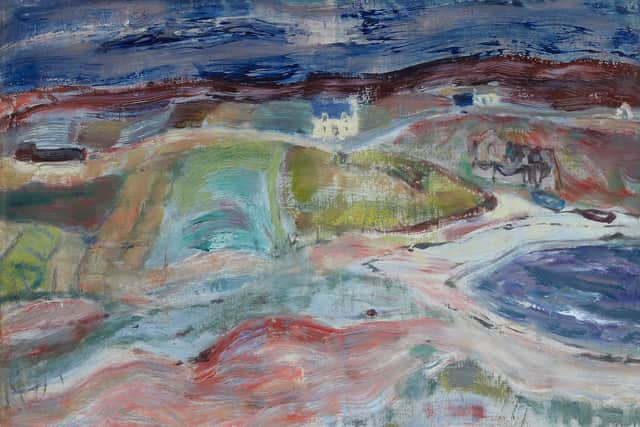
“One thing which emerged is the whole idea of what influence is,” Wood says. “There’s a uniqueness about how that influence might be shaped from artist to artist because every artist is different. It could be about specific skills or talking through ideas. Kindness, camaraderie and respect for a student’s practice certainly shone through, but sometimes it’s about challenge as well. It can be just a sliding doors moment, something that is said at a pivotal point which puts them on a path to being an artist who can practice with confidence.”
For Matthew Dalziel, such a moment came during his time as a student at Duncan of Jordanstone when Will Maclean invited him to his studio. “I came from a mining community, I had never been in an artist’s studio,” Dalziel remembers. “I remember looking at all the objects Will had collected which he could put into his work. He was very generous in explaining how that worked. It gave me confidence: this is what an artist’s life looks like, maybe that could be for me.”
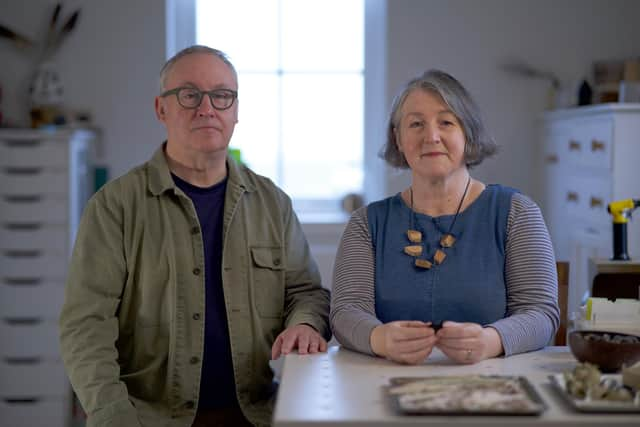
Louise Scullion adds that disagreement can also be productive. “I was studying Environmental Art at Glasgow School of Art when David Harding joined the department. His big idea is the context is 50 per cent of the work and is very pro public art – there was a huge resistance to that amongst my peers. He forced us to articulate what it was we did want to do. The grit in the oyster created quite an interesting pearl.”
While each of Scotland’s four historic art schools evolved its own character, the RSA helps create a connecting narrative across time. Wood says: “We are not the whole story by a long stretch, but we are an interesting and important part of it. The identity of art in a country and how that evolves is intrinsically linked to artists training other artists.”
As the training of artists passed into the hands of the art schools, the Academy shifted its focus towards supporting emerging talent with prizes, scholarships and travel bursaries. Wood says: “I think that is just as important, particularly at that moment when you’re coming out of art school and you’re still finding your way. That recognition, that opportunity to focus on your practice and develop it, is part of the means by which artists become artists.”
For Maclean, a key moment came when one of his tutors at Gray’s School of Art, Frances Walker, recommended him to become an RSA Associate. It proved a lifeline, socially and professionally, giving him an opportunity to show work in the RSA’s Annual Exhibition, and connecting him with opportunities in the central belt.
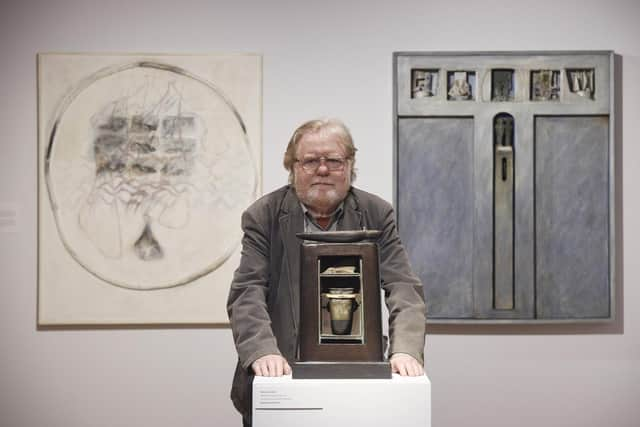
“The Academy was such an important part of my artistic life and social life,” he says, “particularly for a young artist who trained in Aberdeen, trying to find my feet at a time when most of the action was happening in Edinburgh. Being made an Associate was a life-saver for a struggling young schoolteacher.”
By the time Maclean was teaching at Duncan of Jordanstone himself, art education was shifting away from the more rigid traditional model he had experienced towards a looser, more interdisciplinary approach which focuses on students finding their own unique artistic voice.
Wood says: “One thing which came through in the research was that all the artists really valued the foundational skills they learned, but also really valued having the opportunity to experiment and find a creative voice through more modern and conceptual approaches. The paradox is that nowadays there’s almost an argument for bringing the Life School back because the training in drawing and practical skills is perhaps in danger of disappearing.
“Although the approach to art teaching has changed, the thing that’s remained the same is that artists are teaching other artists. As long as the teaching of art is with the artists, I think the future remains bright, whatever the institutional background might be.”
Origin Stories is at the RSA, Edinburgh, from 24 January until 8 March. This feature was produced in association with the Royal Scottish Academy
The Scotsman’s arts newsletter is now sent twice a week - subscribe today
Want the latest Scottish headlines sent directly to your phone? Sign up to our new WhatsApp channel here
Comments
Want to join the conversation? Please or to comment on this article.